Stakeholders commit to transparency, accountability in utilization of Mineral Development Revenue in Asutifi North

By Benjamin Akoto, GNA

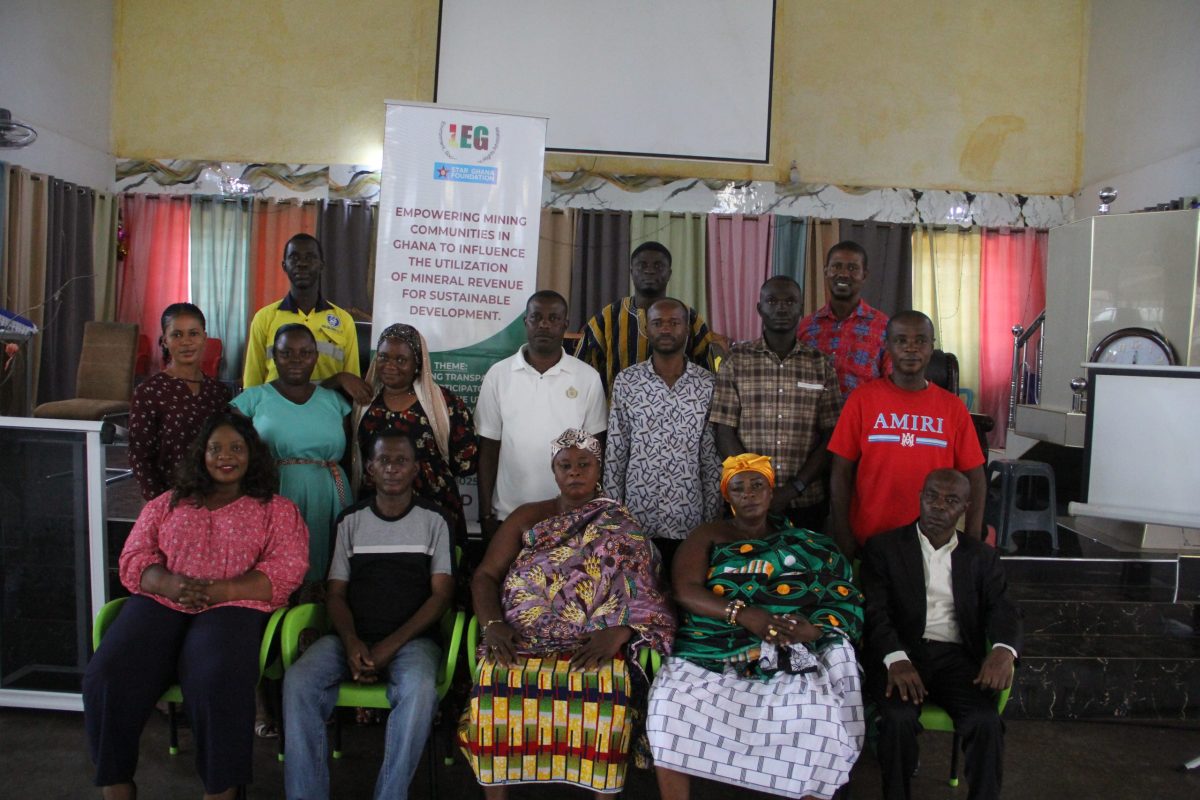
At a policy dialogue and resource allocation meeting held at Kenyasi, the District capital, the stakeholders said they remained dedicated to providing clear updates on fund receipts as well as the detailed cost in project execution.

The meeting was organised by the Livelihood and Environment Ghana (LEG), an environmentally centered Non-Governmental Organisation, with support from the STAR Ghana Foundation.

It aligned the implementation of phase two of the promoting community-based volunteerism for active citizenship being undertaken by the NGO.

Titled: “Empowering Mining Host Communities in the Asutifi North District to Influence the Utilisation of Mineral Revenue for Sustainable Development,” the project sought to promote responsible use of mineral revenues for long-term community benefit.

The meeting followed a district-level social accountability forum and community sensitization campaigns conducted by LEG and the Ahafo Mineral Revenue Watch Volunteers.

It aimed at presenting community feedback to officials responsible for budgetary planning and resource allocation and to bridge the gap between community needs and local government decision-making.

Comprising members of the District Assembly’s Finance and Administration Committee, the stakeholders emphasised the need to improve direct communication and information sharing with local communities and also deepen engagement with community representatives and volunteers in planning and decision-making processes.

Mr Richard Adjei-Poku, the Executive Director of LEG, explained that although Ghana was the largest gold producer in Africa, mining activities continued posing significant challenges to host communities, including environmental degradation and loss of livelihoods.

He stressed the need for responsible resource management to mitigate those long-term impacts.

Mr Adjei-Poku said that mineral revenues should not be used for recurrent expenditure, instead be invested in projects that promoted long-term socio-economic transformation like schools, hospitals, roads and job creation.

He explained that the implementation of the second phase of the project aimed at ensuring that royalties from the MDF were utilised effectively to support sustainable development.

Mr Adjei-Poku highlighted the role of the Ahafo Mineral Revenue Watch Volunteers, explaining that the volunteer was a group established during the first phase of the project and they were tasked to engage with stakeholders to ensure equitable and proper utilisation of the MDF.

Miss Patricia Agyemang, an Assembly Member at the Asutifi North District Assembly, urged the community members to ensure a formidable front in promoting development and accountability, saying that collective efforts were required in addressing emerging local concerns.

The Assembly acknowledged the existing communication gaps, committing to improve transparency, equitable distribution and execution of development projects in the mining communities.

LInk to article: https://gna.org.gh/2026/03/stakeholders-commit-to-transparency-accountability-in-utilisation-of-mineral-development-revenue-in-asutifi-north/

Nathaniel Nyanor
    Leave a Comment

    Your email address will not be published. Required fields are marked *

    Similar Posts

    Mining Pollution and Water Contamination in Ghana’s Mining Communities
    Mining Pollution and Water Contamination in Ghana’s Mining Communities

    Mining remains one of the most important sectors of Ghana’s economy. The country is globally recognized for its gold p
    Director urges use of mining revenue to tackle long-term development needs of local communities

    Director urges use of mining revenue to tackle long-term development needs of local communities

    Are we ensuring a just transition for the communities on the front lines of resource extraction?
    Are we ensuring a just transition for the communities on the front lines of resource extraction?

    It was an honor to share 21 years of on-the-ground experience addressing this very question at the 3-day conference on E

    Bottom Image