Are we ensuring a just transition for the communities on the front lines of resource extraction?

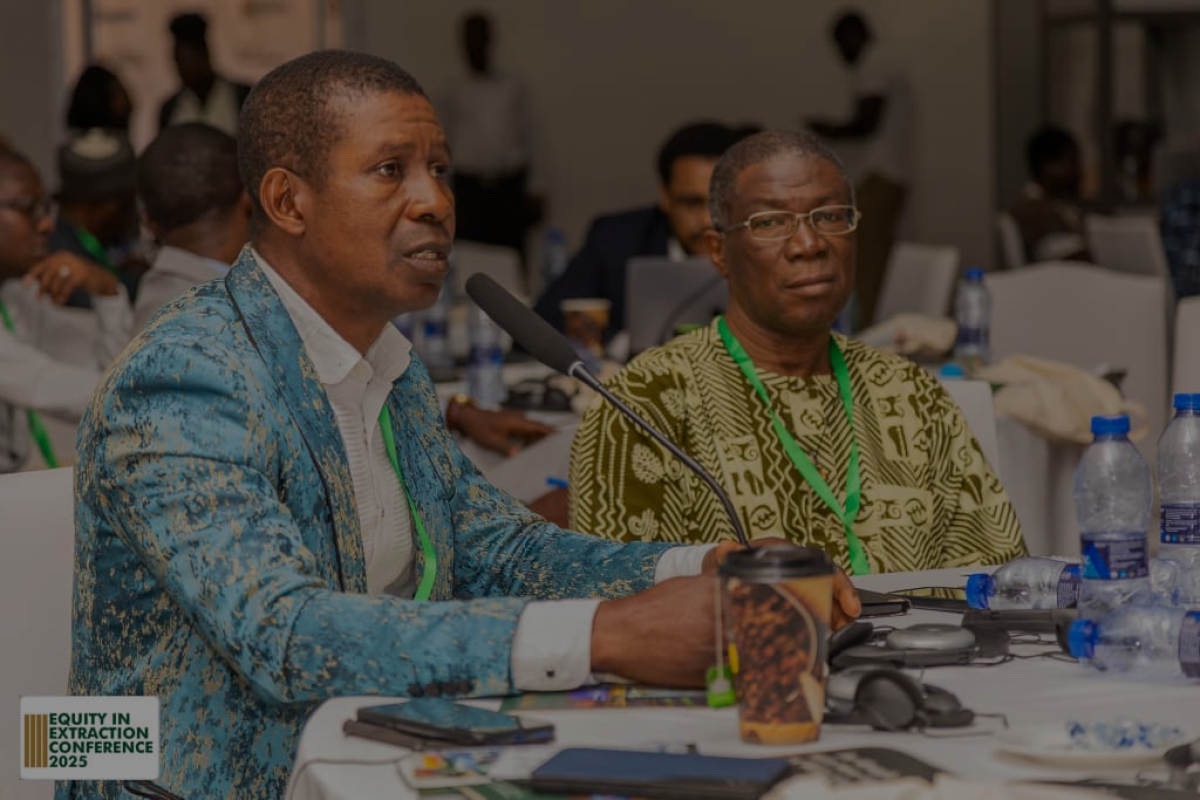
It was an honor to share 21 years of on-the-ground experience addressing this very question at the 3-day conference on Equity in Extraction. Our Executive Director, Richard Adjei-Poku, joined esteemed leaders to discuss the realities faced by those living in the shadow of mining operations.
While we celebrate the global move to solar, hydro, and wind, his presentation highlighted a stark paradox: the very communities whose resources have powered nations continue to suffer deep inequalities and environmental devastation.
Our recent work across Ghana’s mining regions reveals a harsh and unacceptable reality:

1. Systematic Destruction of Livelihoods: Farming is the primary source of income for these communities. Yet, surface mining is systematically destroying fertile land, leaving families with no way to support themselves.

2. Grave Human Rights Violations: Our latest study, covering 7 mining regions, uncovered a disturbing pattern of abuse—from the pollution of essential water bodies to community brutalities, including tragic incidents of citizens being shot and killed. Fair compensation and meaningful consultation are largely absent.

3. Profound Inequality in Benefit Sharing: The immense wealth extracted from the land rarely translates into community development. Instead, it leaves a legacy of youth unemployment, biodiversity loss, and social disruption.

This is a reality Livelihood and Environment Ghana (LEG) refuses to accept. Since our inception in 2004, we have been committed to changing this narrative through concrete action:

1. Building Resilience through sustainable livelihood programs
2. Empowering Communities with education on their environmental and human rights.
3. Driving Accountability through persistent advocacy and mitigation efforts.

Change is possible. We are currently supporting three victims of mining-related abuses to seek justice through the courts, a crucial step made possible with support from the Global Greengrants Fund.

The energy transition is not merely a technological challenge; it is a moral one. True progress is not just about what energy sources we use, but how we source them. A sustainable future must be built on a foundation of environmental justice and human dignity for all.
A sincere thank you to the organizers, ISODEC and IDEAs, and the Ford Foundation for creating a platform for this vital dialogue.

Nathaniel Nyanor
    Leave a Comment

    Your email address will not be published. Required fields are marked *

    Similar Posts

    Stakeholders commit to transparency, accountability in utilization of Mineral Development Revenue in Asutifi North

    Stakeholders commit to transparency, accountability in utilisation of Mineral Development Revenue in Asutifi North
    Mining Pollution and Water Contamination in Ghana’s Mining Communities
    Mining Pollution and Water Contamination in Ghana’s Mining Communities

    Mining remains one of the most important sectors of Ghana’s economy. The country is globally recognized for its gold p

    Director urges use of mining revenue to tackle long-term development needs of local communities

    Director urges use of mining revenue to tackle long-term development needs of local communities

    Bottom Image